
Questions & Answers for Patients
❓ What is a colonoscopy?
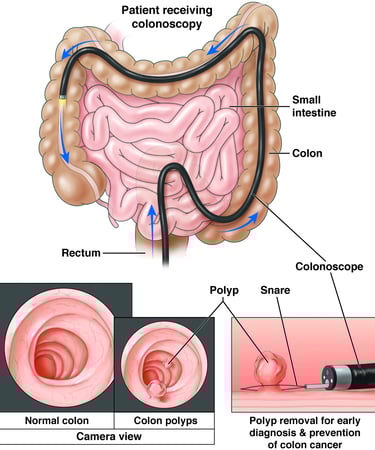
🔍 A colonoscopy is a test that lets the doctor look inside your colon (large intestine).
The doctor uses a thin, flexible tube with a tiny camera to see the colon clearly.
❓ Why do doctors do a colonoscopy?
🩺 A colonoscopy helps doctors:
🔵 Find colon polyps
🎯 Look for a mass or tumor
🩸 Find the cause of bleeding
🔥 Check for IBD (Crohn’s disease or ulcerative colitis)
It can help find problems early and keep you healthy.
❓ What are colon polyps?
🔵 Colon polyps are small bumps that grow inside the colon.
Most are harmless
Some can turn into cancer over time
Doctors can remove polyps during the test.
❓ What is a colon mass?
🎯 A mass is a larger growth in the colon.
It may cause:
Bleeding
Belly pain
Changes in bowel habits
Colonoscopy helps doctors see and biopsy the mass.
❓ Why is a colonoscopy used for bleeding?
🩸 Bleeding can cause:
Blood in stool
Low iron (anemia)
Feeling tired or weak
A colonoscopy helps find where the bleeding is coming from.
❓ How does a colonoscopy help with IBD?
🔥 IBD causes swelling and sores in the colon.
Colonoscopy helps doctors:
See inflammation
Check ulcers
Take small samples (biopsies)
See if treatment is working
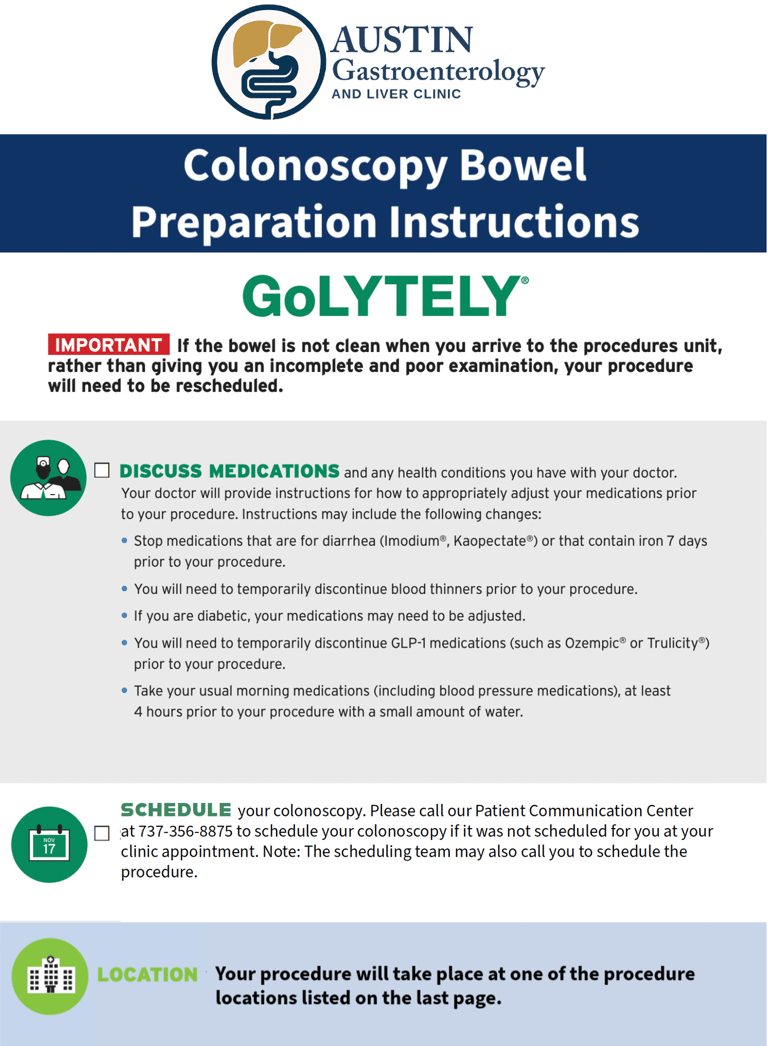
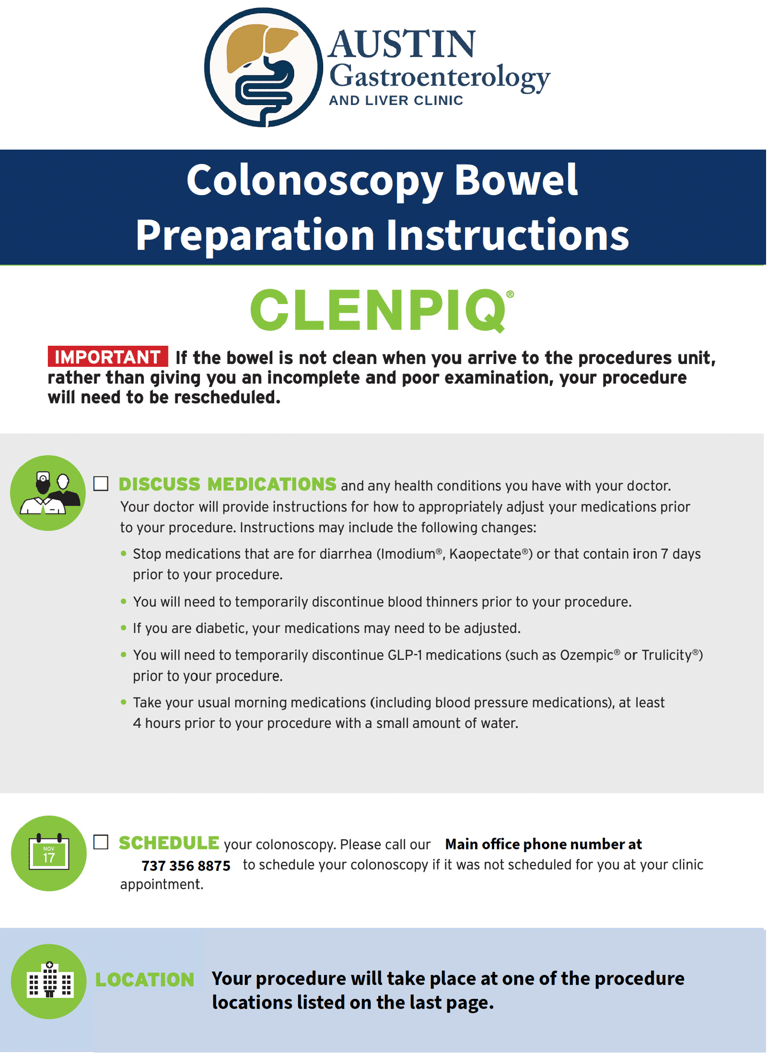
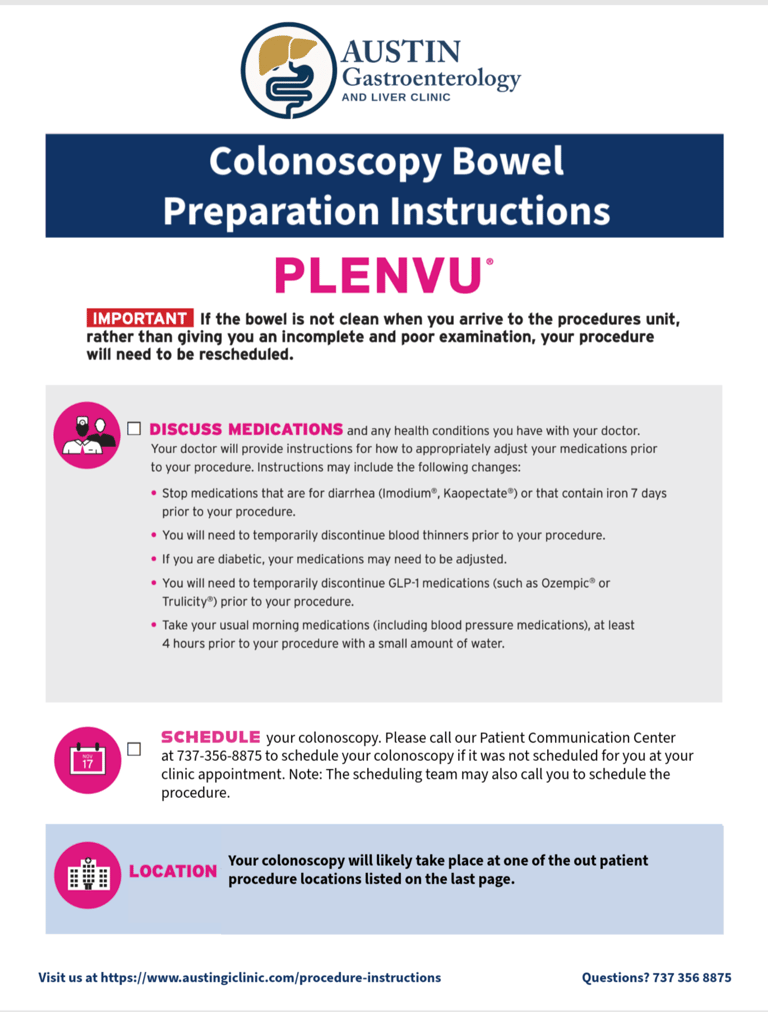
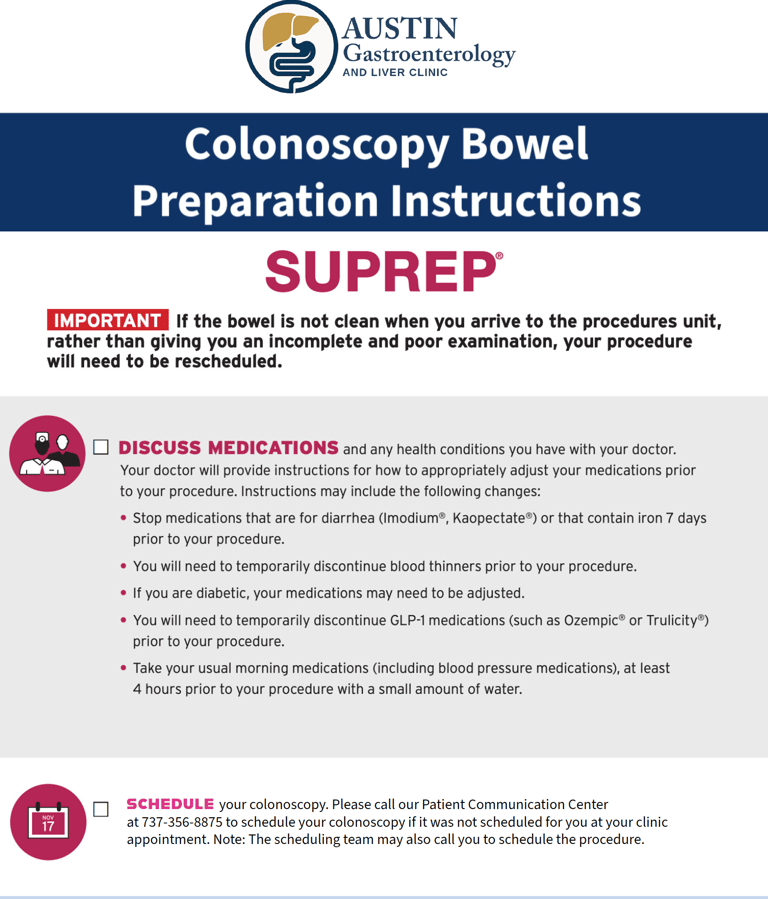
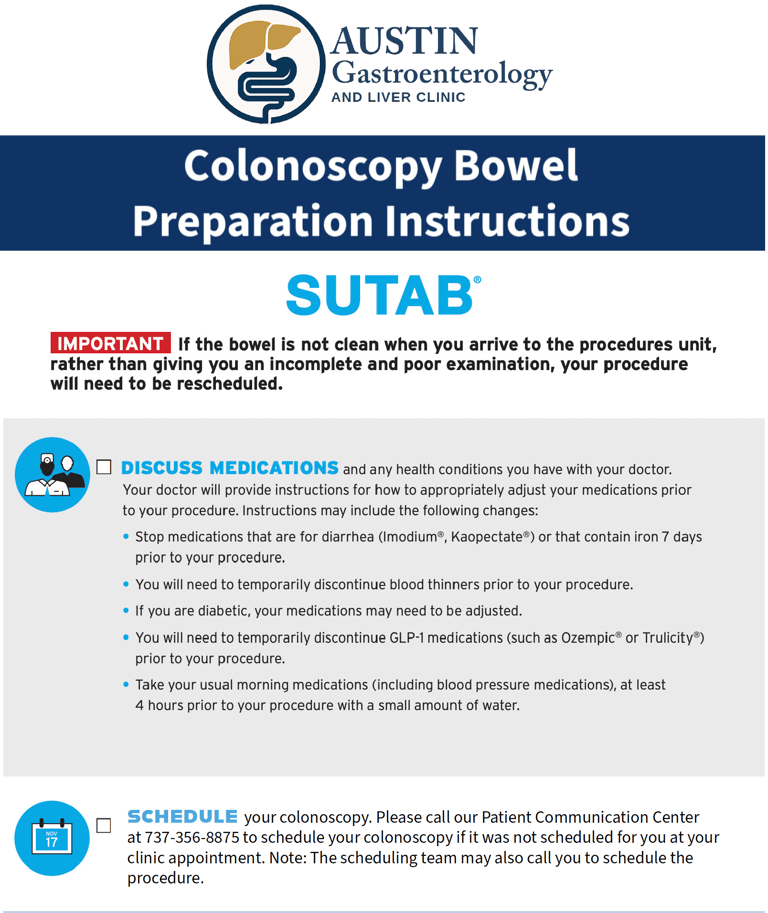
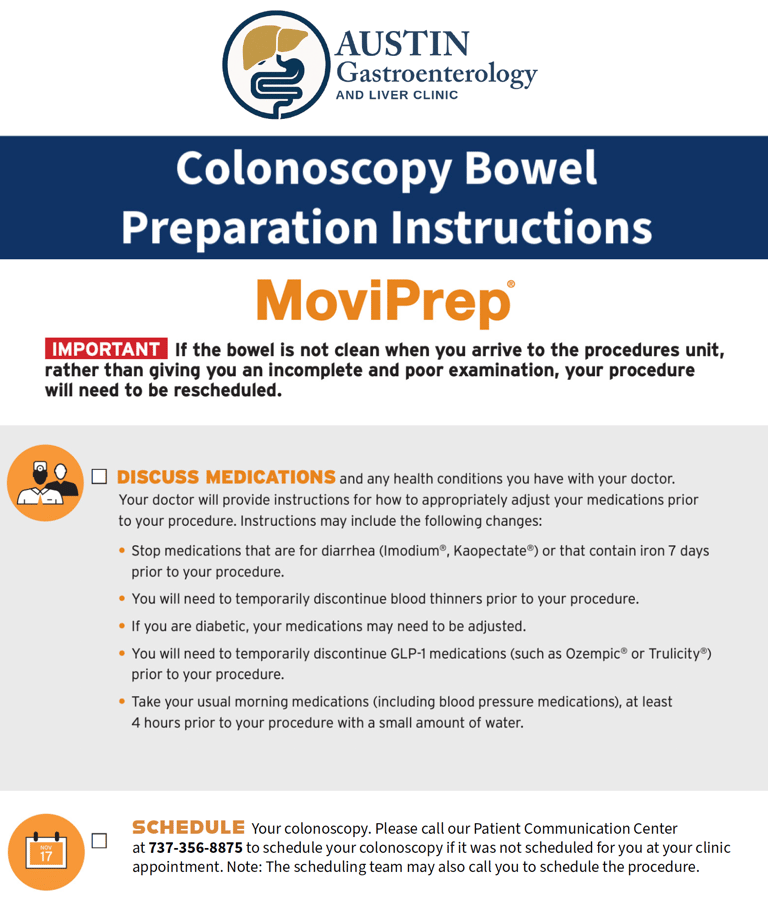
❓ How do I prepare for a colonoscopy?
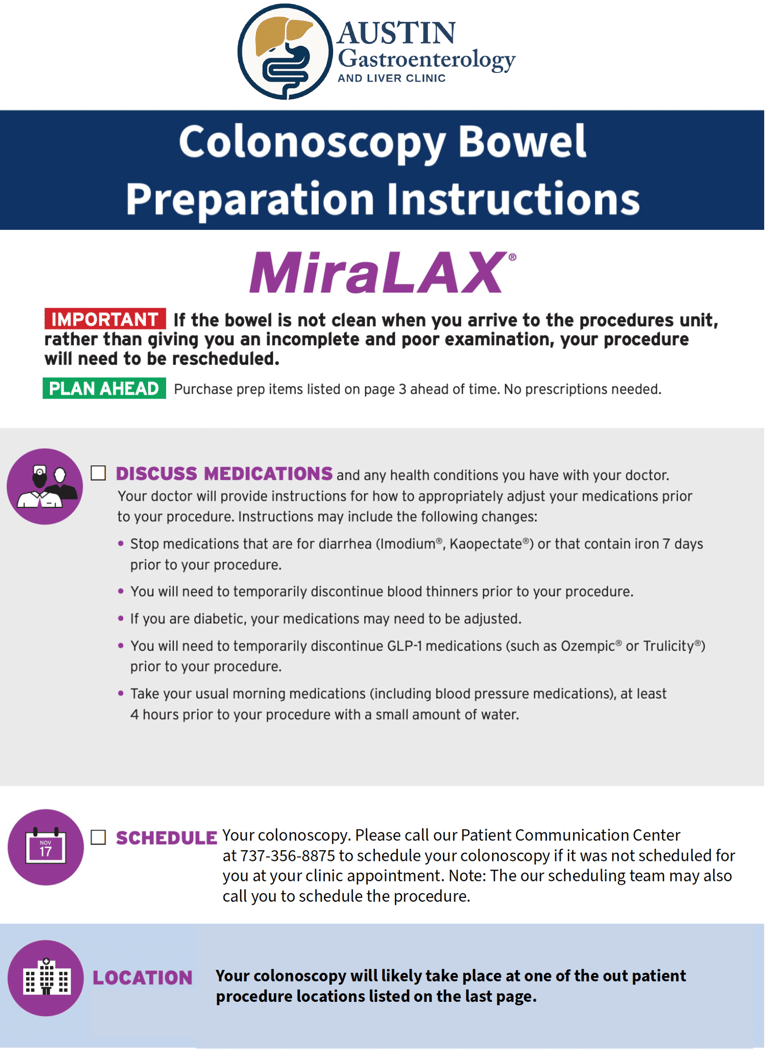
📋 Preparation is very important.
You may need to:
🚫 Stop eating solid food
💧 Drink clear liquids
💊 Take bowel prep medicine to clean out stool
A clean colon helps the doctor see clearly.
❓ Will the test hurt?
😴 No. You will get medicine to help you sleep.
Most people:
Feel no pain
Remember little or nothing about the test
❓ What happens during the test?
⏱️ The test takes about 20–30 minutes.
You lie on your side
The camera checks the colon
Polyps can be removed
Samples can be taken if needed
❓ What happens after the test?
🛌 You rest until the medicine wears off.
You will need someone to drive you home.
You may feel:
A little gas or bloating
Sleepy for a short time
Your doctor will explain the results.
❓ Are there any risks?
⚠️ Colonoscopy is very safe.
Rare risks include:
Bleeding
Tear in the colon
Reaction to medicine
Your doctor will discuss risks with you.
❓ When should I call my doctor?
📞 Call if you have:
Severe belly pain
Heavy bleeding
Fever
Dizziness
✅ Key Points to Remember
✔ Colonoscopy finds problems early
✔ Polyps can be removed right away
✔ It helps diagnose bleeding and IBD
✔ Good prep makes the test better
COST OF COLONOSCOPY
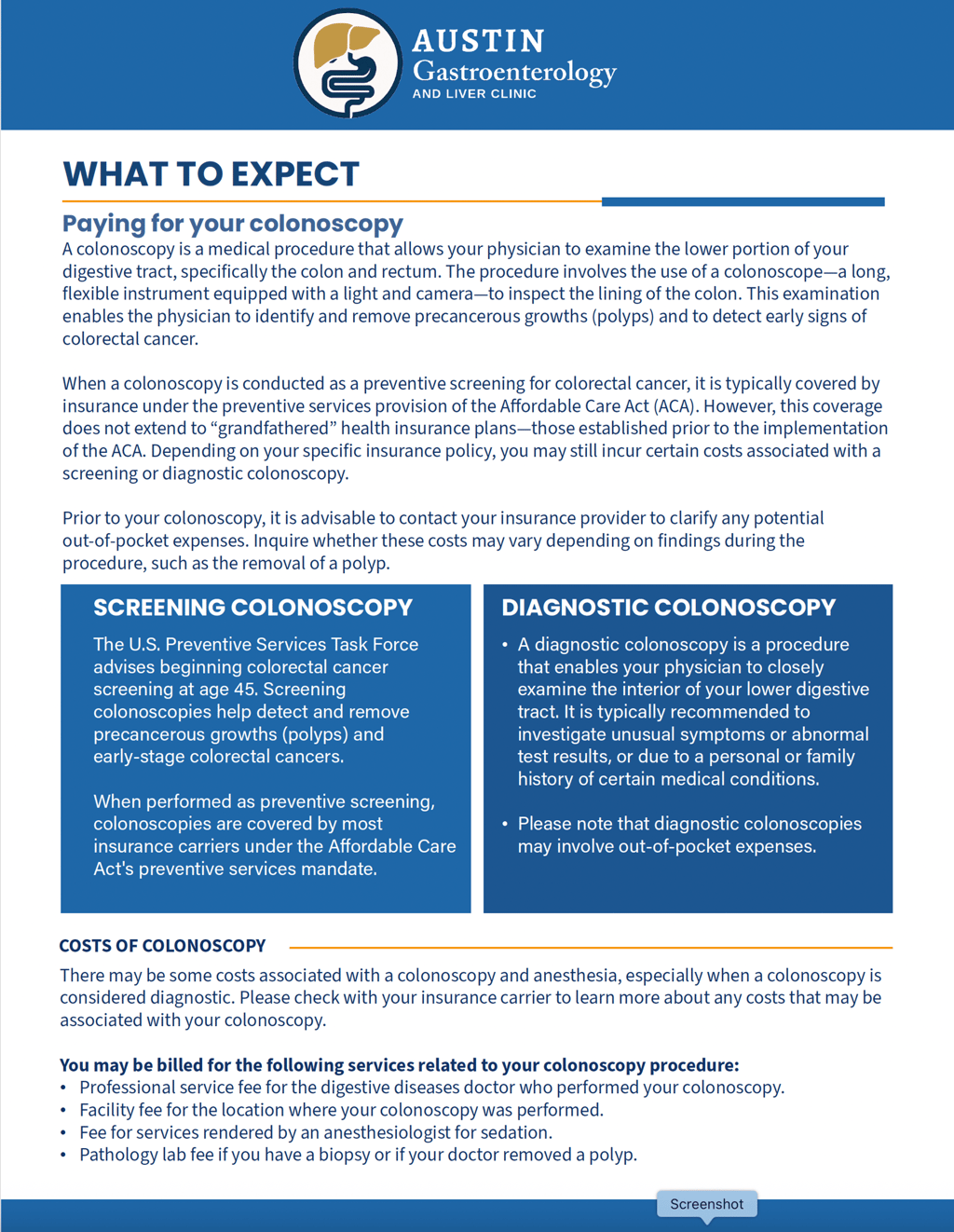
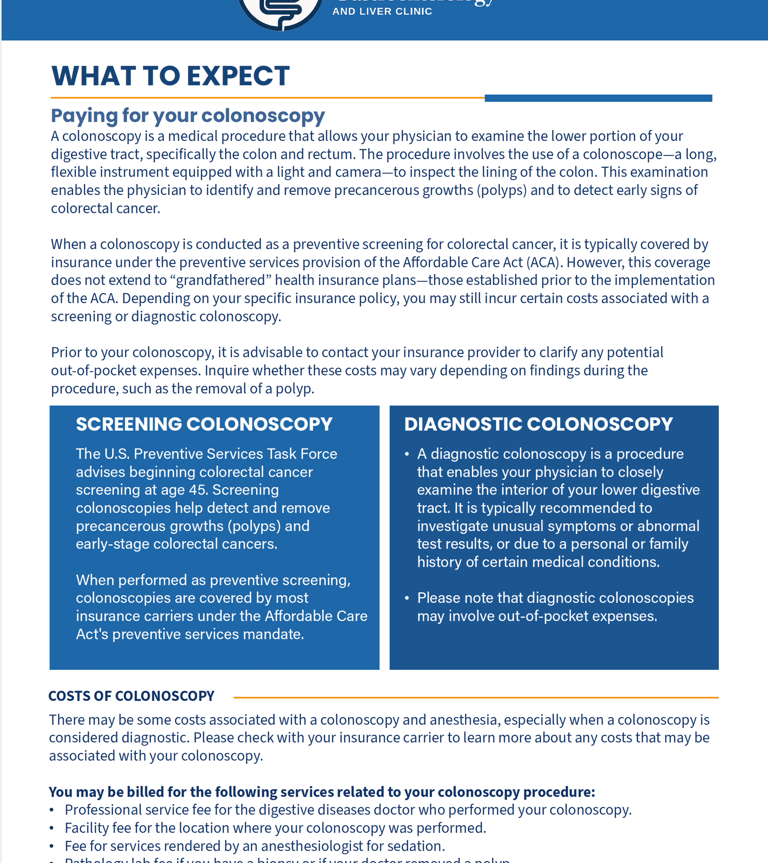
If your insurance plan denies or does not cover monitored anesthesia care, you may be responsible for a flat fee of $200. Even if your insurance does cover monitored anesthesia care for a diagnostic colonoscopy, you could still be required to pay co-insurance and deductibles, which may exceed $200 depending on the specifics of your policy.
A diagnostic colonoscopy is a procedure that enables your physician to closely examine the interior of your lower digestive tract. It is typically recommended to investigate unusual symptoms or abnormal test results, or due to a personal or family history of certain medical conditions. Please note that diagnostic colonoscopies may involve out-of-pocket expenses.
For billing inquiries or to appeal charges related to your colonoscopy, please contact your health insurance provider or the Austin Gastroenterology and Liver Clinic billing office at 737-356-8875.
Upon arrival for your colonoscopy appointment, you will check in at admissions. Our team will confirm that you have arranged appropriate transportation, as you will not be permitted to drive yourself home after the procedure. It is required that you have someone accompany you home. You may use public transportation, such as a taxi or bus, provided an adult escort is present.
Before the procedure, you will change into a gown, and a nurse will place an intravenous (IV) line for sedation. You will have the opportunity to speak with both the gastroenterologist and a member of the anesthesia team, who will review the procedure, discuss potential risks, and answer any remaining questions. Most patients receive Monitored Anesthesia Care (MAC) and will be asked to sign consent forms at this stage.
The Procedure and Recovery
Once the procedure room is ready, you will be taken in on a gurney. The colonoscopy itself typically lasts 15 to 30 minutes. Most patients experience little or no discomfort during the examination.
After the procedure, you will be monitored in a recovery area until the anesthesia wears off. Your designated companion may join you there.
Before discharge, you will receive an After Visit Summary (AVS) detailing the findings from your colonoscopy. If biopsies are taken, they will be sent for laboratory analysis, and you will receive the results along with recommendations for future screenings in approximately one to two weeks. The gastroenterologist will also prepare a report for your referring provider.
Please plan to spend a total of 2 to 3 hours at your appointment.
WHAT TO EXPECT ON THE DAY OF THE PROCEDURE?
CONTACT US
Admin@austingiclinic.com
Phone:+1 (737) 356 8875
© 2025. All rights reserved. Austin Gastroenterology and Liver clinic PLLC


Austin Gastroenterology and Liver Clinic (AGLC) is a Professional Association owned by the physicians who practice within it. AGLC’s physicians are directly involved in the management of patient services.
FAX: (737) 290-1567